
Setting your amplifier gain incorrectly is one of the fastest ways to damage your subwoofers and create distorted, underwhelming sound. Despite being one of the most critical adjustments in any car audio system, amp gain remains widely misunderstood—it’s not a volume knob, and cranking it to maximum won’t give you more bass. Let’s break down exactly how to set amp gain car audio the right way for clean power and maximum performance.
What Is Amplifier Gain and Why Does It Matter?
Before diving into the process, you need to understand what gain actually does. The gain control on your amplifier is an input sensitivity adjustment that matches the signal voltage from your head unit or processor to the input stage of your amp. Think of it as a translator between your source unit and amplifier, ensuring they speak the same language.
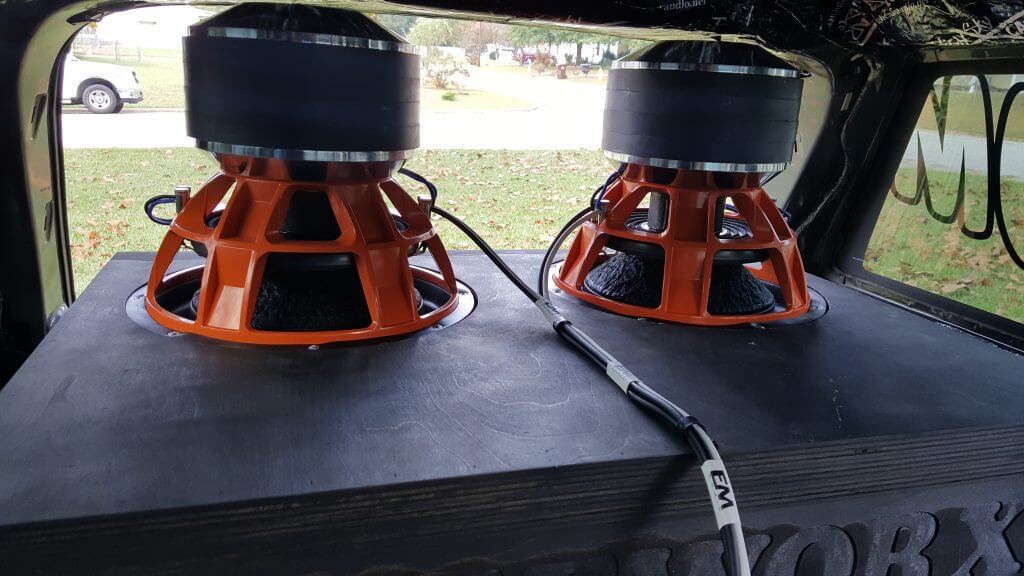
When you learn how to set amp gain car audio properly, you’re essentially telling your amplifier how much to amplify the incoming signal. Set it too low, and you’ll have weak output that forces you to crank your head unit volume to dangerous levels. Set it too high, and you’ll introduce clipping and distortion that can destroy your speakers and subwoofers. Whether you’re running a massive EM Audio subwoofer setup for SPL competition or a clean daily driver system, proper gain setting is absolutely essential.
Tools You’ll Need to Set Gain Correctly
You can set gain by ear, but using proper tools gives you accuracy and confidence that your system is dialed in correctly. Here’s what you’ll need:
**Digital Multimeter (DMM):** This is the most reliable method for setting gain. A basic DMM that measures AC voltage will work perfectly and costs under $20.
**Test Tones:** Download or use a 50Hz test tone (for subwoofers) or 1kHz test tone (for full-range speakers) at 0dB from a reliable source. Burn it to a CD, load it on a USB drive, or use a test tone app if your head unit supports it.
**Oscilloscope (Optional):** This is the gold standard for professionals, but it’s overkill for most enthusiasts and requires more technical knowledge to use properly.
**Your Ears:** While not as precise as a DMM, experienced listeners can get close by identifying distortion, though this method risks damaging equipment during the process.
The DMM Method: Step-by-Step Amp Gain Setting
This is the most popular and accessible method for how to set amp gain car audio systems correctly. Follow these steps carefully:
**Step 1:** Disconnect your speakers or subwoofers from the amplifier. This protects them from potential damage during the tuning process.
**Step 2:** Set all EQ settings, bass boost, and signal processing features to flat or off. You want a clean, unprocessed signal.
**Step 3:** Turn your amplifier gain all the way down (counterclockwise).
**Step 4:** Play your test tone and turn your head unit volume to 75-80% of maximum. Some head units clip before maximum volume, so staying slightly below max provides a safety margin.
**Step 5:** Set your multimeter to measure AC voltage and connect it to the amplifier’s speaker outputs (positive and negative terminals).
**Step 6:** Use this formula to calculate your target voltage: Voltage = √(Watts × Ohms). For example, if you’re running an EM Audio subwoofer on a 1000-watt RMS amplifier at 2 ohms, your target is √(1000 × 2) = 44.7 volts.
**Step 7:** Slowly turn up the gain while watching your multimeter. Stop when you reach your calculated target voltage.
**Step 8:** Reconnect your speakers, and you’re done. Your gain is now properly matched to your system’s power capabilities.
Common Gain Setting Mistakes to Avoid
Even with instructions, several mistakes trip up car audio enthusiasts. Never set gain with music playing—test tones provide consistent signal levels that music cannot. Don’t confuse gain with volume; your head unit controls volume, while gain matches signal levels. Avoid using bass boost or EQ during gain setting, as these alter the signal and lead to inaccurate adjustments.
Another critical mistake is assuming all amplifiers produce their rated power. If you’re using quality USA-made equipment like EM Audio amplifiers that actually deliver their rated specifications, your calculations will be accurate. However, many budget amps significantly underperform their ratings, which means your calculated voltage targets won’t match reality.
Fine-Tuning After Initial Gain Setting
Once you’ve set your gain using the DMM method, reconnect everything and listen carefully. Play music you know well at various volume levels. If you hear distortion at higher volumes, your gain might be slightly too high—turn it down a touch. If your system sounds weak and you’re running out of headroom on your head unit before reaching desired volume, you can increase gain slightly.
Remember that proper gain setting works in conjunction with all your other settings. Your subsonic filter, low-pass filter, and any bass boost should be adjusted after gain is set correctly.
Conclusion
Understanding how to set amp gain car audio properly is fundamental to getting the most from your system while protecting your investment. The DMM method takes the guesswork out of the equation, giving you measurable, repeatable results that ensure clean power delivery. Whether you’re pushing a competitive SPL setup or simply want your daily driver to sound its best, proper gain setting is non-negotiable. Ready to upgrade your system with subwoofers and amplifiers built to precise specifications? Explore the full range of USA-made performance products at EM Audio and experience what properly matched, quality components can deliver.